


Flammability Testing
With specialized in-house laboratories, purpose-built equipment, experienced technicians, and DER support, ACES handles a broad range of aviation flammability and fire-testing requirements for aircraft materials, interiors, components, and systems. Capabilities include oil burner (fireblock) testing, Bunsen burner testing, NexGen/Sonic burner testing, radiant panel flame propagation, heat release, smoke density and toxicity, cargo fire-containment testing, and battery fire-containment evaluation. Bringing these services together in one facility helps simplify certification programs, reduce outside coordination, and move projects more efficiently from test planning through final compliance documentation.
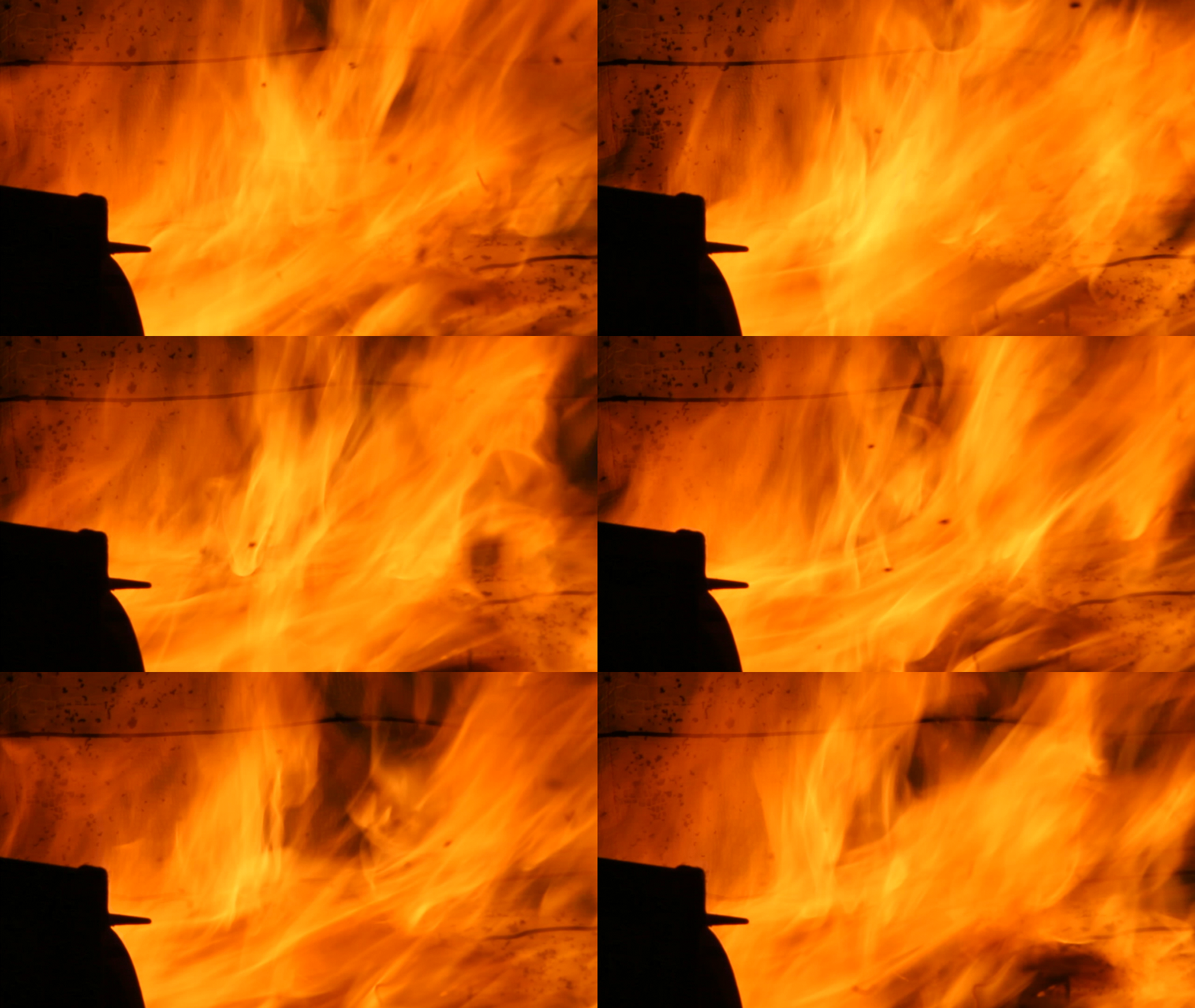
Oil burner testing is used to evaluate the fire resistance and fire-containment performance of a variety of aircraft materials, components, and assemblies. ACES supports applications ranging from aircraft seat cushions to cargo liners, acoustic insulation, powerplant fuel systems, and firewall assemblies.
Seat Cushion / Fireblock Testing
The Oil Burner Test, also known as the Fireblock Test, evaluates the fire performance of aircraft seat cushion assemblies by measuring cushion weight loss and the char length produced on the dress cover and underlying foam materials.
The test is used to demonstrate compliance with the applicable requirements of 14 CFR §§ 25.853(c) and 29.853(b). ACES operates two in-house oil burner laboratories, allowing multiple projects and test programs to be supported simultaneously.
Seat Cushions Commonly Requiring Testing
- Seatback cushions
- Bottom cushions
- Headrest cushions
- Footrest and leg-rest cushions
In addition to oil burner testing, applicable seat cushion materials are required to undergo 12-second vertical testing to demonstrate compliance with the requirements of 14 CFR §§ 25.853(a) and 29.853(a).
Additional Oil Burner Testing Capabilities
Applicable CFRs
14 CFR § 25.853(c)
14 CFR § 29.853(b)
14 CFR § 25.853(a)
14 CFR § 29.853(a)
14 CFR § 25.855(c)
14 CFR § 25.856(b)
Bunsen Burner testing evaluates the flammability characteristics of materials used throughout an aircraft, including dress-cover materials, foams, interior panels, flooring, seat belts, cargo liners, electrical wiring and other aircraft components.
These test methods are used to demonstrate compliance with applicable requirements of 14 CFR Parts 23, 25, 27 and 29.
ACES' Bunsen Burner laboratory includes three ACES-designed and fabricated flammability chambers, providing the capacity to efficiently accommodate both individual specimens and larger testing programs.
Available Bunsen Burner Test Methods
Applicable CFRs
14 CFR Part 23
14 CFR Part 25
14 CFR Part 27
14 CFR Part 29
The Next Generation Oil Burner, commonly referred to as the NexGen or Sonic Burner, is used by ACES for specialized testing of magnesium-alloy aircraft components and materials.
Magnesium presents unique fire-performance considerations, and the NexGen / Sonic Burner provides the high-intensity flame exposure needed to evaluate applicable magnesium materials and components under controlled test conditions.
The Flame Propagation, or Radiant Panel Test, evaluates the flammability and flame-propagation characteristics of aircraft thermal and acoustic insulation materials.
During testing, the specimen is subjected to a radiant heat source and a burner flame to evaluate the manner and extent in which flame propagates across the material.
This testing is used to demonstrate compliance with applicable requirements of 14 CFR §§ 23.856 and 25.856.
Applicable CFRs
14 CFR § 23.856
14 CFR § 25.856
Heat Release testing evaluates the rate at which aircraft cabin materials release heat when exposed to a combination of a burner flame and radiant heat.
The results provide important information regarding how a material may contribute to fire growth within the aircraft cabin and are used as part of the applicable interior material certification process.
ACES operates three in-house heat-release test devices. The equipment was designed and constructed by ACES, allowing ongoing preventive maintenance and providing redundancy to help minimize equipment-related downtime.
Smoke Density testing determines the smoke-emission characteristics of aircraft cabin materials when test specimens are exposed to a burner flame and radiant heat.
Testing can be used to demonstrate compliance with applicable requirements of 14 CFR § 25.853(d).
Toxicity Testing
ACES also offers toxicity testing to evaluate the combustion products generated when aircraft materials are exposed to fire. Testing can be performed to support applicable regulatory requirements, including those associated with 14 CFR Part 25, Appendix F, as well as requirements defined within customer-supplied specifications.
Toxicity evaluation may be performed on materials including:
- Plastics
- Composite materials
- Textiles
- Coatings
Together, smoke-density and toxicity testing provide information about both smoke generation and the combustion products produced when aircraft materials are exposed to fire.
Applicable CFRs
14 CFR § 25.853(d)
14 CFR Part 25, Appendix F
ACES provides testing of Fire Containment Covers (FCCs) and Unit Load Devices (ULDs) to support compliance with Technical Standard Order TSO-C203.
Certification programs can include a progression of sub-level tests and evaluations before advancing to the complete six-hour fire-containment test. These preliminary evaluations allow materials, assemblies, construction methods, and other design characteristics to be examined earlier in the development process before committing to a full-scale qualification test.
Fire Containment Testing Capabilities
Lavatory Waste Compartment Testing
ACES can evaluate aircraft lavatory waste compartments and waste receptacles to determine their ability to contain a fire originating within the compartment.
Testing supports demonstration of compliance with 14 CFR § 25.853(e), which addresses the fire-containment performance required for receptacles used for the disposal of flammable waste materials in aircraft lavatories.
Test programs can evaluate the complete waste-compartment assembly, including the receptacle, surrounding enclosure, door or access panel, seals, and other features that may affect the installation's ability to contain a fire.
Full-scale FCC and ULD testing is conducted in ACES' 2,400-square-foot laboratory dedicated to large-scale testing. ACES DERs and trained laboratory technicians can support the complete test process, including assembly of the fire load, installation of the test article, execution of the six-hour test, and post-test fire extinguishment.
Test Monitoring & Data Collection
- Climate-controlled observation room for safe on-site witnessing
- Camera coverage of all four corners of the test article for monitoring and recording
- Thermographic imaging to identify temperatures and the location of hot spots within the test article
- Configurable thermocouple fixture supporting any arrangement of up to 15 thermocouples, with additional thermocouples available when required
Applicable CFRs
14 CFR § 25.853(e)
ACES provides battery testing and battery flammability testing for containment bags, boxes, protective systems, and related devices intended for aviation applications.
Testing can be used to evaluate how effectively a system manages the heat, flame, smoke, and other fire-related effects that may occur during a battery failure or abnormal battery event.
When battery-containment products are intended for use aboard aircraft, the materials used in their construction may also require separate flammability certification testing based on the applicable aircraft application and certification basis.
Thermal Runaway
Thermal runaway is an emerging area of interest within aviation battery safety as battery technology and aircraft applications continue to evolve. While dedicated regulatory requirements for thermal-runaway testing are still developing, ACES can support evaluation programs intended to better understand battery behavior, containment performance, and fire-related risks associated with these events.
Remote test witnessing is available across ACES' testing capabilities, allowing customers, engineering teams, certification representatives, suppliers, and other authorized project stakeholders to observe testing without requiring everyone to travel to the laboratory.
Live remote access can be incorporated into the test program so participants from multiple organizations and locations can observe the same test in real time. This can simplify project coordination, reduce travel requirements, and allow a broader group of technical stakeholders to participate directly in the witnessing process.
Designed for Multi-Party Projects
The capability is scalable for projects involving numerous participants. On a recent Spirit test, ACES supported 47 remote viewers representing multiple companies during a single test event, demonstrating the ability to accommodate large, geographically distributed project teams.