


Smoke Density & Toxicity Testing
Smoke Density & Toxicity Testing evaluates the smoke and combustion byproducts produced by aircraft interior materials when exposed to fire conditions. Smoke density testing measures the amount of smoke generated by materials such as plastics, composites, textiles, and coatings, while toxicity testing evaluates potentially hazardous gases released during combustion. Together, these tests provide critical information about material performance during a fire event and help manufacturers demonstrate compliance with applicable aircraft interior safety and certification requirements. ACES provides testing support for materials and components throughout the development and certification process.
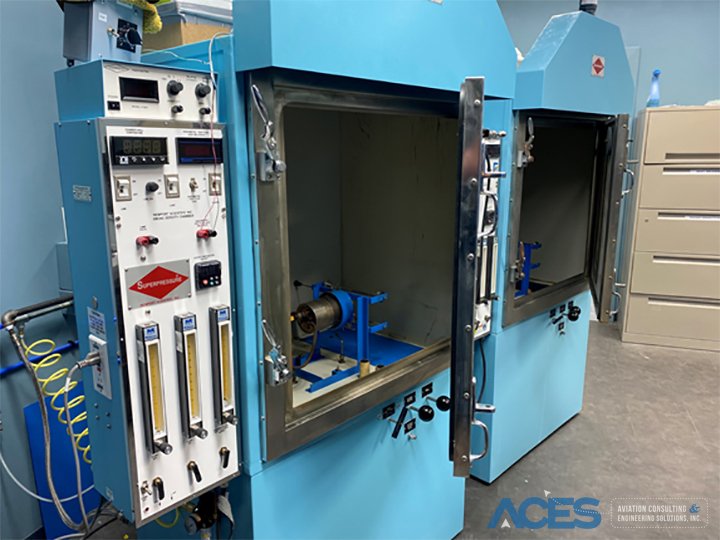
Smoke Density testing evaluates the smoke-emission characteristics of aircraft cabin materials when specimens are exposed to a combination of burner flame and radiant heat.
The resulting data helps determine how much smoke a material may generate under fire conditions and supports evaluation of materials used throughout the aircraft interior.
Testing can be used to demonstrate compliance with applicable requirements of 14 CFR § 25.853(d).
Typical Material Applications
Applicable CFRs
Toxicity testing evaluates the combustion products generated when aircraft materials are exposed to fire.
The testing can provide information about gases and other combustion byproducts produced during burning and can be performed to support applicable regulatory requirements or customer-defined material specifications.
Materials Commonly Evaluated
Applicable Requirements
- 14 CFR Part 25, Appendix F
- Customer-specific material and test specifications
Smoke Density and Toxicity testing can be coordinated with ACES engineering, flammability, and certification resources as part of a broader aircraft material qualification or certification program.
ACES can support customers from initial test planning and specimen preparation through laboratory testing, evaluation of results, documentation, and certification coordination.