
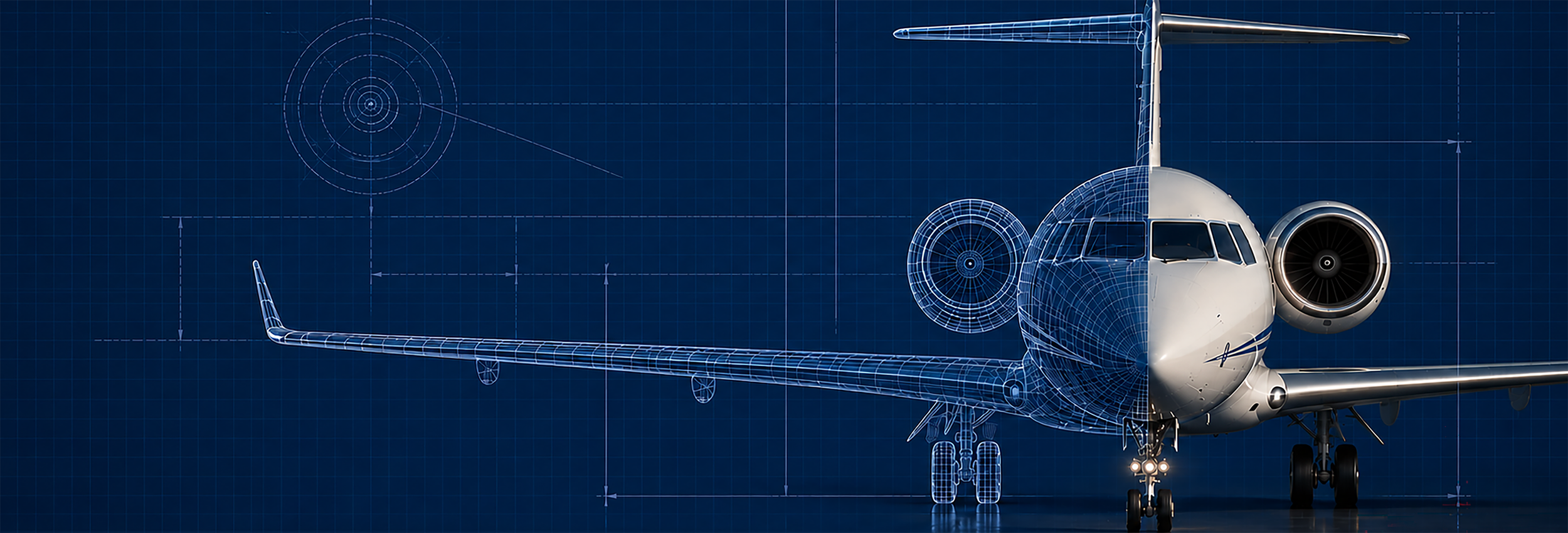


Back Engineering
Back Engineering provides a practical solution when original drawings, models, or dimensional data for an aircraft component are unavailable, incomplete, or no longer representative of the existing part. ACES uses measurements and captured digital geometry from physical components and assemblies to recreate usable engineering data, develop accurate digital models and drawings, and establish a foundation for replacement parts, modifications, upgrades, and revised installations. Back-engineered data can also be coordinated with ACES mechanical design, structural analysis, testing, and certification capabilities when additional development or substantiation is required.
Reverse engineering can be used to reconstruct dimensional and design information for legacy aircraft components when original engineering data is unavailable, incomplete, or no longer representative of the existing part.
Measurements and captured digital geometry from the physical component can provide the foundation for recreating usable engineering information and establishing an accurate record of the existing design.
Reverse-engineered geometry can be used to support the development of replacement components when usable original design information is limited or unavailable.
Existing physical geometry can be measured and recreated as digital engineering data, providing a basis for replacement-part design, fabrication, and continued engineering work.
Existing aircraft geometry can be captured and evaluated as the starting point for design modifications, upgrades, and revised installations.
Reverse engineering provides usable dimensional information from the physical component or assembly, allowing the existing design to be recreated digitally and incorporated into the development of a modified configuration.
Reverse engineering allows physical geometry to be converted into digital models, drawings, and technical information for continued engineering use.
Captured measurements and digital geometry can establish a usable engineering record that supports future design, modification, documentation, and development activities.