


Battery Flammability Testing

Battery Flammability Testing evaluates the fire performance of aircraft battery systems, containment solutions, and associated materials under demanding thermal conditions. Testing can help assess flame resistance, fire containment, material performance, and the effects of thermal runaway to better understand how a battery installation may respond during a potential failure event. ACES provides specialized testing and engineering support throughout the development and certification process, helping manufacturers evaluate designs, identify potential risks, and generate the test data needed to support safe and reliable aircraft applications.
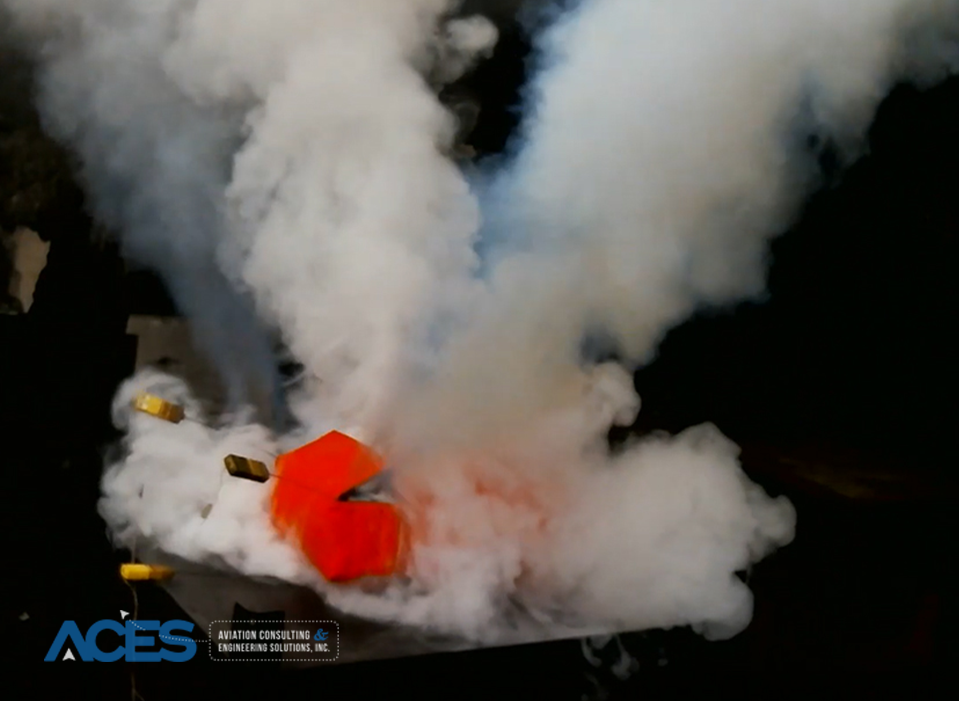
ACES provides battery testing and battery flammability testing for containment bags, boxes, protective systems, and related devices intended for aviation applications.

Testing can be used to evaluate how effectively a containment system manages the heat, flame, smoke, and other fire-related effects that may occur during a battery failure or abnormal battery event.

Typical Containment Applications

Containment Bags Evaluation of flexible battery-containment systems intended to help limit fire-related effects during an abnormal battery event.
Containment Boxes Testing of rigid enclosures and protective housings designed to contain heat, flame, smoke, or related battery hazards.
Protective Systems Evaluation of battery-protection products and assemblies developed for aviation applications.
Related Devices Testing of other battery-containment or fire-mitigation products based on the intended aircraft application and project requirements.
Battery-containment test requirements can vary significantly depending on battery chemistry, enclosure design, materials, intended aircraft use, and customer-specific requirements.

When battery-containment products are intended for use aboard aircraft, the materials used in their construction may also require separate flammability certification testing.

The appropriate test method depends on the material, the design of the containment system, its intended installation, and the certification basis for the aircraft application.

Fabric & Flexible Materials Materials used in containment bags, liners, wraps, and other flexible protective systems may require flammability evaluation.
Rigid Materials Plastics, composite materials, panels, and enclosure components may require testing based on their intended aircraft use.
Coatings & Finishes Surface treatments and coatings can be evaluated when they form part of the finished battery-containment assembly.
Complete Assemblies Material-level testing can be coordinated with evaluation of the complete containment product when required by the program.
ACES can coordinate battery-related material testing with its broader in-house flammability capabilities when a project requires multiple test methods.

Thermal runaway is an important area of aviation battery safety as battery technology and aircraft applications continue to evolve.

ACES can support evaluation programs intended to better understand battery behavior, containment performance, and the fire-related risks associated with thermal-runaway events.

Evaluation Considerations

Heat Evaluation of elevated temperatures and the ability of a containment system to manage heat generated during a battery event.
Flame Assessment of flame exposure and the effectiveness of protective materials or containment assemblies.
Smoke Observation of smoke generation and the ability of the system to manage or contain fire-related emissions.
Containment Performance Evaluation of how the complete product behaves during an abnormal or high-energy battery event.
Dedicated regulatory requirements for thermal-runaway testing continue to evolve. ACES can work with customers to develop an appropriate evaluation approach based on the battery system, intended aircraft use, and project-specific requirements.

Battery testing requirements can vary significantly from one project to another based on battery chemistry, containment design, construction materials, intended aircraft use, and customer-specific specifications.

ACES can work with customers to identify an appropriate test approach and coordinate battery testing with related flammability, engineering, and certification activities when required.

Test Planning Development of a test approach based on the battery system, containment design, and project requirements.
Specimen Preparation Coordination of test articles, materials, and configurations prior to laboratory evaluation.
Laboratory Testing In-house evaluation of battery-containment products and applicable construction materials.
Documentation Support Coordination of test results and supporting documentation with broader engineering or certification programs when applicable.
ACES can help customers determine an appropriate testing strategy when regulatory requirements, customer specifications, and emerging battery technologies create unique project considerations.